A Dutch learning app for Ukrainians in the Netherlands, with a full DevOps layer around it: Docker, Kubernetes, Terraform, a CI pipeline with security scans and GitOps deploys with Argo CD.
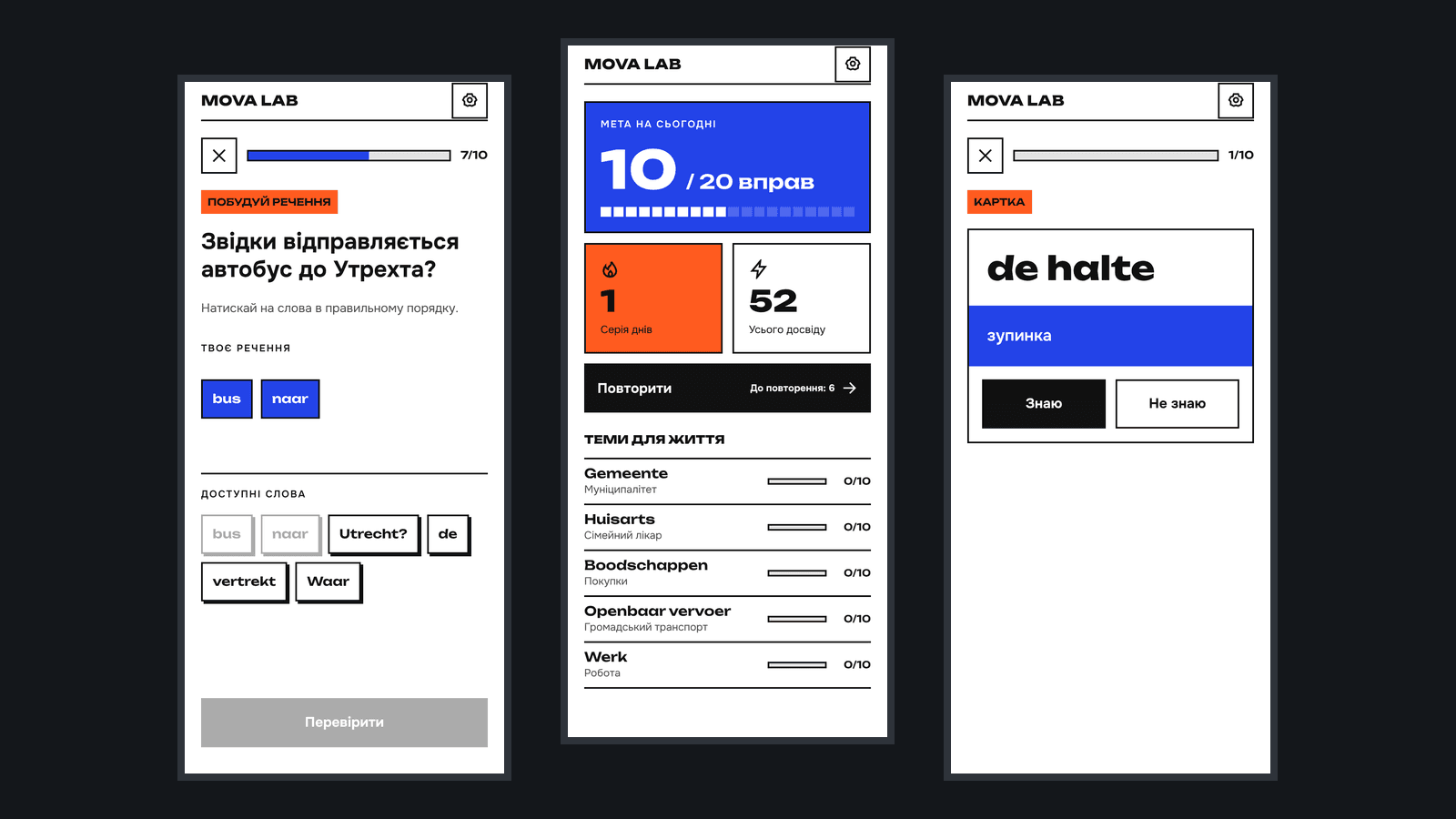
Ukrainians who move to the Netherlands need Dutch for very practical moments: an appointment at the gemeente, a visit to the huisarts, the supermarket, the train. Mova Lab teaches exactly those situations, with the whole interface in Ukrainian.
I also use it to learn DevOps by doing. The app is the workload, and around it I set up the delivery pipeline a team would use in production, running locally without a cloud bill.
What the app does
- Onboarding in Ukrainian: choose a level from A0 to A2 and a daily goal
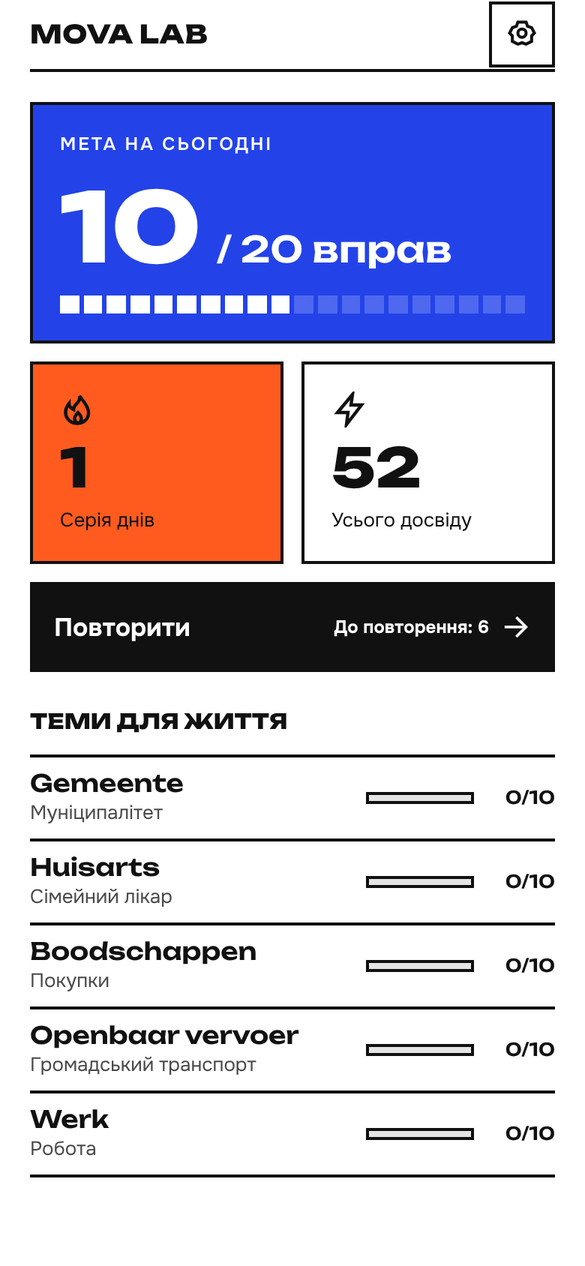
- Five practical topics (gemeente, huisarts, boodschappen, openbaar vervoer and werk) with about ten words and sentences each
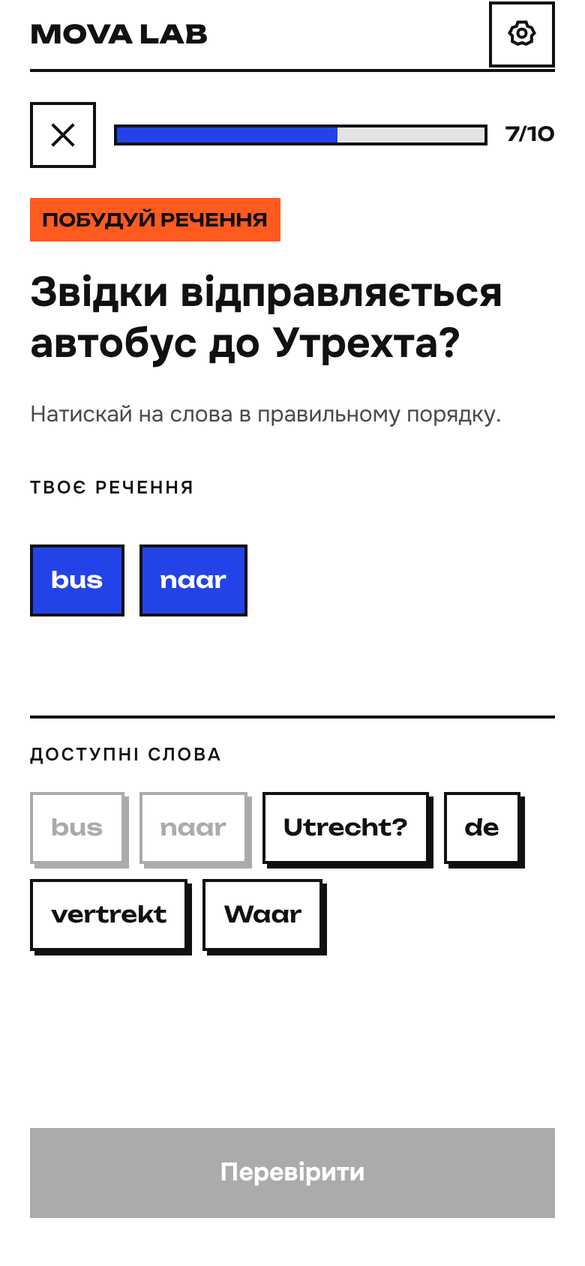
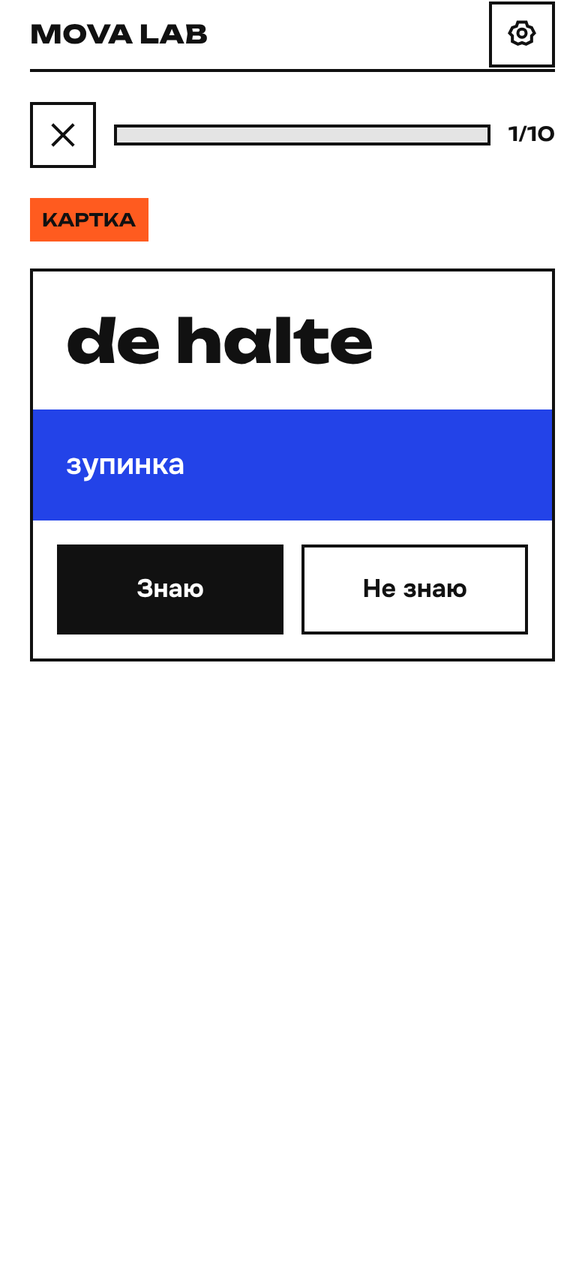
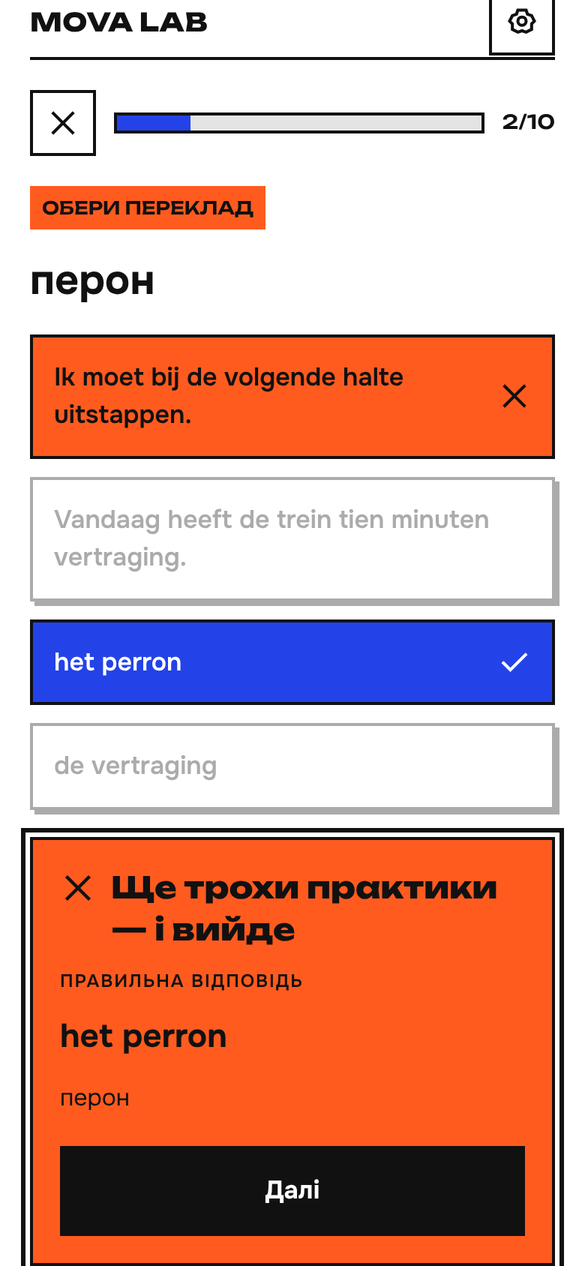
- Three exercise types: flashcards with audio, multiple choice, and building a sentence from word tiles to practise Dutch word order
- Spaced repetition, so words you get wrong come back sooner
- XP, a daily streak and progress per topic
- Accounts, so progress is saved
Screenshots
How it works
- A Next.js frontend in TypeScript talks to a Django REST Framework API, using session authentication with CSRF protection
- PostgreSQL stores users, progress and the review schedule; the lesson content is versioned JSON in the repository
- Audio uses the browser's built-in Dutch voice, so there are no audio files or paid APIs
The DevOps layer
git push
  → CI: tests and security scans
  → container images pushed to GHCR
  → CI commits the new image tag to Git
  → Argo CD sees the change and syncs the Kubernetes cluster
Docker
Multi-stage builds keep compilers and npm out of the final images, and both images run as non-root users. Docker Compose starts the stack in order: database, migrations, backend, frontend, with health checks in between.
Kubernetes
Kustomize manifests for a local kind cluster. PostgreSQL runs as a StatefulSet with a persistent volume, the backend is a Deployment with an init container that runs the migrations, and readiness and liveness probes tell Kubernetes when to send traffic and when to restart. Every container runs non-root, with a read-only root filesystem and no extra Linux capabilities.
Terraform
One terraform apply creates the kind cluster, installs Argo CD with Helm and generates the database password and Django secret key into a Kubernetes Secret, so no secrets are stored in Git.
CI with security scans
GitHub Actions runs the backend and frontend tests, validates the Terraform and Kubernetes files, scans the code with Semgrep, the dependencies with OSV-Scanner and the images with Trivy, and creates an SBOM for each image. A separate end-to-end workflow builds the images, starts a kind cluster, deploys the app and runs a smoke test that registers a user and completes an exercise.
GitOps with Argo CD
CI never touches the cluster. It pushes images and commits the new tag to Git; Argo CD pulls that change and applies it, and self-heal reverts manual changes made in the cluster.
Trade-offs
- kind instead of a cloud cluster: free and reproducible on a laptop, and the same manifests can move to AKS or EKS later
- Pull-based GitOps instead of deploying from CI: CI needs no cluster credentials, at the cost of one more component to run
- Secrets generated by Terraform: nothing sensitive in Git, but the Terraform state has to be protected; in production I would use a secrets manager
- PostgreSQL inside the cluster: simple for a lab; in production I would use a managed database
What the scans caught
The pipeline found real problems in my own project before anything shipped:
- Semgrep flagged that the version of the Trivy GitHub Action I referenced was one of the tags hijacked in a supply-chain attack (CVE-2026-33634), so every action is now pinned to a commit SHA
- The PostgreSQL container ran as root; it now runs as a non-root user
- Django REST Framework and a frontend dependency had known vulnerabilities, so I upgraded them
- npm inside the frontend image carried vulnerable packages it does not need at runtime, so it is removed from the final image